Best Time to Pour Concrete in Central Texas: Marble Falls Guide
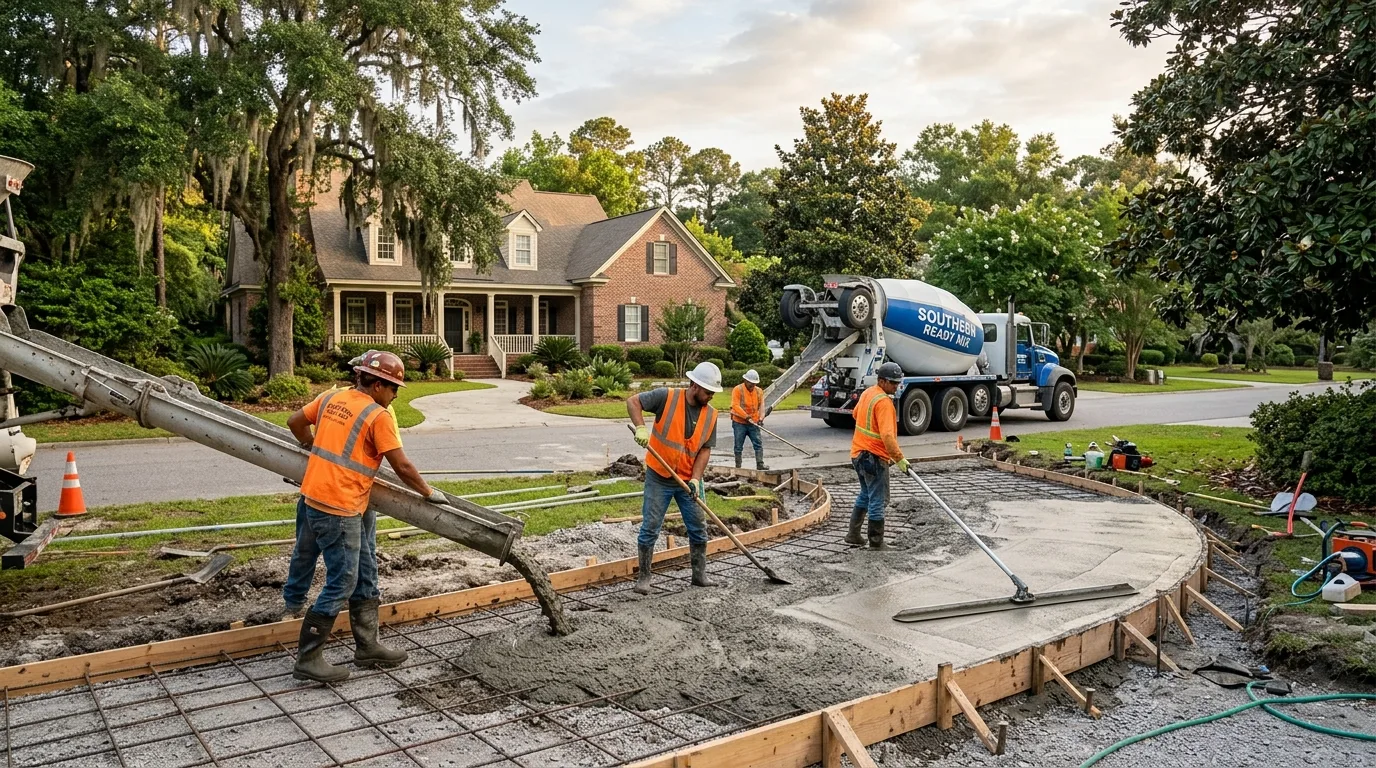
Marble Falls averages 100 days over 90°F per year — a stat that matters more for concrete installation than almost any other construction activity. Concrete is a chemical process, not just a building material: how quickly or slowly it cures during the first 24–72 hours determines much of its long-term strength and surface durability. Pour in the wrong season in Central Texas and you risk plastic shrinkage cracking, premature strength loss, or freeze damage — problems that can’t be retroactively fixed and that appear weeks or years after the initial pour. In this post, we cover the best and worst months to schedule concrete in Marble Falls, what happens to concrete at temperature extremes, and how to get the most out of any project that has to happen outside the ideal windows.
Schedule Your Marble Falls Concrete Project
We plan every project around optimal curing windows for Hill Country conditions. Call (888) 376-0955 for scheduling.
The Ideal Concrete Curing Temperature Range
Concrete develops strength through a chemical reaction called hydration — the combination of water molecules with cement particles to form calcium silicate hydrate crystals. This reaction is temperature-sensitive: too cold, and it slows or stops; too hot, and it accelerates to the point where the concrete surface dries faster than the interior hydrates, creating surface cracks and strength loss.
The ideal curing temperature range is 50–75°F for the first 72 hours after pouring. Concrete poured within this range develops close to its design strength without special measures. The 70–80°F days common in Marble Falls during April, May, October, and early November fall squarely in this optimal range — which is why those months produce the best outcomes for concrete flatwork in the Hill Country.
Month-by-Month Calendar for Marble Falls
January: Average high 62°F, average low 36°F. Freeze risk is at its peak — Marble Falls sees approximately 38 below-freezing nights per year, and January is when most of them occur. Fresh concrete exposed to below-freezing temperatures before it achieves minimum strength (typically 500 PSI, reached in 24–36 hours) will suffer ice crystal formation that permanently damages the internal structure. Concrete can be poured in January with proper protection — insulating blankets over the fresh slab, extended curing time, no cold water in the mix — but it’s the highest-risk month for residential projects.
February: Average high 65°F, average low 40°F. Freeze risk begins to decrease but remains a factor. Later in the month, mild periods of 65–70°F create acceptable windows. Still a caution month requiring protective measures for any below-freezing nights in the forecast.
March: Average high 72°F, average low 48°F. The Hill Country is warming up rapidly. Mid-March through the end of the month offers some of the year’s best concrete conditions — warm enough for active hydration, cool enough for a full working day without accelerated drying. Freeze risk drops significantly after mid-month.
April: Average high 79°F, average low 56°F. Excellent month for concrete in Marble Falls. Comfortable working temperatures, reliable dry periods between the spring rain events that increase in frequency toward May and June. One of the two best months of the year.
May: Average high 86°F, average low 63°F. Still good for concrete, though temperatures are climbing. Early May is ideal; late May requires monitoring for higher-humidity days that slow curing. Rain frequency increases toward the end of the month.
June: Average high 91°F, average low 70°F — the wettest month at 4.6 inches average rain. Concrete can be poured in June but requires more active management: sun shading or wet curing immediately after finishing, evaporation retardant added to the mix design, and careful scheduling to avoid afternoon heat. Worth doing if the project timeline requires it.
July–August: Average high 95–96°F. The most challenging months for concrete in Marble Falls. The evaporation rate from the concrete surface exceeds the bleeding water rate, causing plastic shrinkage cracks in the first hour or two after finishing. Successful summer pours require early morning starts (before 8 AM), evaporation retardants, immediate fogging or shading of the finished surface, and wet curing for a full 7 days. Not impossible, but significantly more demanding and risk-carrying than other months. Decorative and stamped concrete is particularly challenging in summer due to the compressed working window.
September: Average high 89°F, average low 66°F. Summer is breaking but slowly. Second half of September is significantly better than the first — temperatures begin falling toward the 80°F range that’s comfortable for concrete. Plan for September projects in the last two weeks of the month.
October: Average high 80°F, average low 56°F. Excellent month — arguably the best month of the year for concrete in Marble Falls. Lower humidity, reliable dry stretches, and ideal temperature range. The second peak of the Hill Country concrete season. Many contractors are heavily booked in October.
November: Average high 68°F, average low 45°F. Good through mid-month; late November brings increasing freeze risk and shorter days. Early November projects in the 60–70°F range are excellent. Projects finishing in late November should monitor the overnight forecast.
December: Average high 61°F, average low 38°F. Freeze risk returns. Similar caution profile to February — possible with protection, but carry the risk of cold snaps affecting fresh concrete. Not recommended for large flatwork without protective measures.
Practical Uses: Seasonal Scheduling by Project Type
- New driveway installation: Schedule April–May or October for best results in Marble Falls. These windows offer ideal hydration conditions and minimal weather risk.
- Stamped or decorative concrete patio: Critical to avoid July–August — the compressed summer stamping window significantly increases the difficulty. April, May, and October are the premium months for decorative work.
- Foundation slab: Foundation pours are less schedule-flexible than residential flatwork but follow the same temperature principles. Avoid pouring in hard-freeze forecasts (January, December). Spring and fall are optimal.
- Concrete repair and resurfacing: Repair mortars and overlays are similarly temperature-sensitive. October–April is ideal; summer repairs are possible but require careful material selection and application management.
- Commercial concrete projects: Best scheduled in fall (September–November) when contractor availability is highest and weather risk is lowest. Many Marble Falls businesses prefer fall scheduling to minimize operational disruption.
Is Now a Good Time for Your Concrete Project in Marble Falls?
Call Marble Falls Concrete at (888) 376-0955. We'll tell you honestly whether the timing works and schedule your project for optimal results.
What Contractors Do for Summer and Winter Pours
When concrete must be poured in challenging conditions, experienced contractors use specific techniques to protect quality:
Hot weather (July–August): Chilled mix water or ice to lower concrete temperature at delivery; evaporation retardant spray applied to the surface immediately after finishing; wet burlap or evaporation-proof curing compounds applied within 20 minutes of finishing; early morning pour timing; sun shading over fresh concrete.
Cold weather (December–February): Heated mix water; accelerating admixtures (calcium chloride in appropriate applications); insulating curing blankets over the finished slab immediately after pouring; extended curing protection until the concrete reaches minimum 500 PSI before any freeze exposure.
Neither approach eliminates weather risk entirely — they manage it. Projects poured in optimal conditions (April, May, October) don’t need any of these measures and are more predictable in their outcome.
Frequently Asked Questions
Can you pour concrete in August in Marble Falls?
Yes, but it requires active hot-weather concrete measures: early start time, chilled mix water or ice, evaporation retardants, immediate wet curing, and full 7-day moist curing rather than the 3-day minimum of spring or fall pours. The cost of these measures is real, and the risk of surface cracking is higher than in cool weather. For stamped or decorative concrete, August is best avoided. For plain structural concrete that must be poured on a specific schedule, summer pours can succeed with proper technique. Read more on our concrete services page.
How does rain affect a fresh concrete pour in Marble Falls?
Rain hitting fresh concrete before it has set (within 2–3 hours of pouring) can damage the surface texture and dilute the surface layer, weakening it. After the concrete has reached initial set, light rain is harmless or even beneficial (keeps the surface moist for curing). The June rain peak — the wettest month in Marble Falls at 4.6 inches average — is worth factoring into project scheduling, though a good contractor monitors the forecast window for a 2–3 day dry stretch to complete the pour and initial curing.
Does the time of day matter for concrete pours in Marble Falls?
In summer, absolutely. An early morning pour (6–8 AM) starts the concrete at the coolest part of the day and gives the finishing crew the maximum possible working window before afternoon heat accelerates surface drying. Afternoon pours in summer should be avoided. In spring and fall, time of day is less critical, though morning pours generally provide a more comfortable working environment.
Plan Your Marble Falls Concrete Project for the Right Season
Marble Falls Concrete schedules every project for optimal Hill Country conditions. Call (888) 376-0955 to get on our calendar.
Related: